At Wellify, we have been interested in research on how daily movement breaks affect our mental and physical health since the very beginning. Here, we have gathered current scientific research and independent studies in this field.
What do swedish health authorities say?
The Public Health Agency of Sweden emphasizes that every movement counts and that even short periods of physical activity can contribute to well-being and increased energy. The agency also highlights the health risks associated with prolonged sitting and the importance of taking regular movement breaks throughout the day.
Contact us here if you will start wellify at your work to help employment start with microworkouts?
Just five extra minutes of movement a day can make a difference
A large international study involving over 135,000 participants shows that even small increases in physical activity can have a significant impact on our health. Researchers, including those from Karolinska Institutet, estimated that just five additional minutes of heart-rate-raising activity per day could prevent around 6% of deaths among the least active individuals. The study also highlights the potential health benefits of reducing sedentary time.
Scientific reference: Ekelund U. et al. (2026). Deaths potentially averted by small changes in physical activity and sedentary time. The Lancet.
Short movement breaks during the workday may help reduce stress
A randomized study involving 52 office workers examined the effects of regular micro workouts over a twelve-week period. Participants completed three to six short exercise sessions per day, each lasting one to three minutes. Researchers observed improvements in blood pressure and perceived stress levels in the exercise group. The findings suggest that micro workouts could be a promising addition to workplace health and wellness initiatives.
Scientific reference: Liu K. & Liang X. (2026). Workplace-embedded exercise-snack to interrupt sedentary work: A 12-week randomized trial on blood pressure and perceived stress with implementation implications.
Digital support can make it easier to build healthy habits
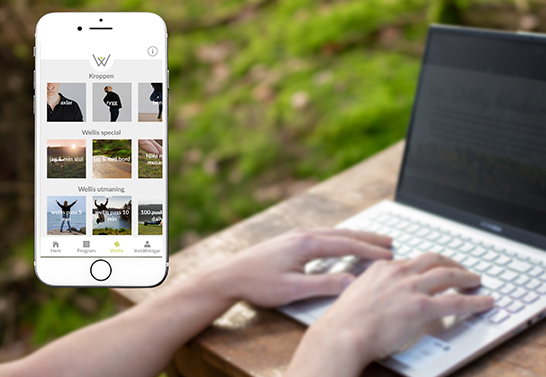
A doctoral thesis from Karolinska Institutet shows that personalized mobile apps have the potential to inspire positive lifestyle changes. The research particularly highlights the importance of motivation, user-friendliness, and personalization. Digital tools can therefore provide valuable support for people looking to incorporate more physical activity and other healthy habits into their daily lives.
Three minutes of movement every half hour can improve health
Researchers at Karolinska Institutet investigated how regular movement breaks affected people with obesity and a sedentary lifestyle. Participants received reminders to move for three minutes every half hour. After three weeks, researchers observed improvements in fasting blood glucose levels and reduced blood sugar fluctuations throughout the day. The study highlights how regular movement breaks can contribute to better blood sugar regulation.
Scientific reference: Smith J.A.B. et al. (2021). Three weeks of interrupting sitting lowers fasting glucose and glycemic variability, but not glucose tolerance, in free-living women and men with obesity.
Digital reminders can help us move more during the workday
A systematic review of 18 studies involving over 1,100 office workers shows that digital reminders can help reduce sedentary time. On average, sitting time decreased by approximately 12 minutes per workday, while daily step counts increased by around 1,000 steps. The findings highlight how simple digital tools can encourage people to incorporate more movement into their everyday routines.
Scientific reference: Leppe-Zamora J. et al. (2025). The effect of computer prompt in breaks of sedentary behaviour among office workers: a systematic review and meta-analysis.
Vi använder cookies på vår hemsida för att ge dig en optimerad upplevelse genom att spara dina preferenser vid upprepade besök. Genom att klicka på "Godkänn alla" godkänner användandet av alla cookies. Men du kan gå till Cookie-inställningar för att göra dina personliga cookie-inställningar.
This website uses cookies to improve your experience while you navigate through the website. Out of these, the cookies that are categorized as necessary are stored on your browser as they are essential for the working of basic functionalities of the website. We also use third-party cookies that help us analyze and understand how you use this website. These cookies will be stored in your browser only with your consent. You also have the option to opt-out of these cookies. But opting out of some of these cookies may affect your browsing experience.